
New Report: AI Is Creating More Tech Jobs in Europe Than It's Eliminating
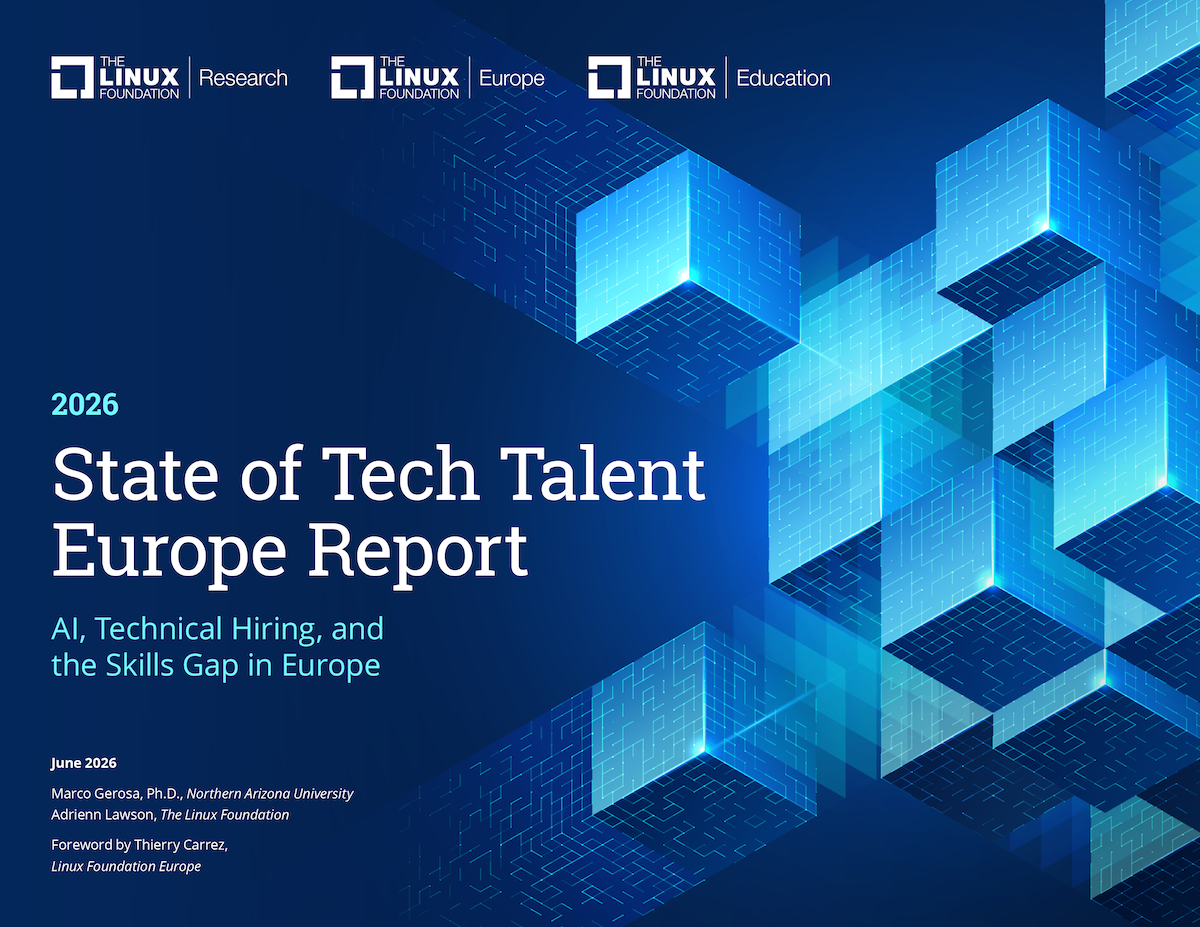
A new Linux Foundation report shows AI is driving a net hiring effect of +27% across European tech organizations in 2026. The real barrier to AI value isn't the technology itself, it's the foundational readiness to deploy it safely.
Written by Causeartist

Photo credit: Causeartist
Key takeaways
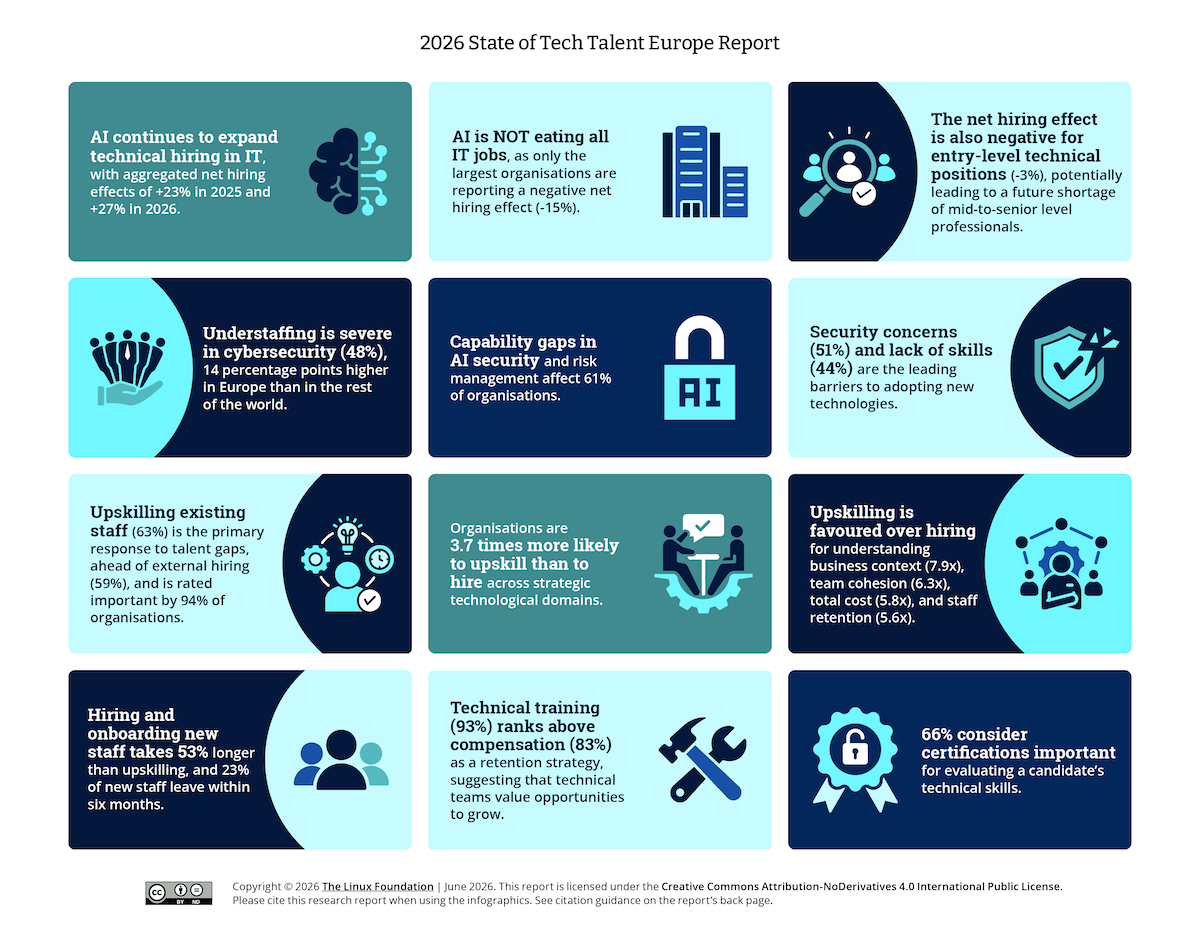
- European organizations expect a +27% net hiring effect from AI in 2026, with smaller organizations trending most positive.
- Security concerns (51%) and skills gaps (44%) are the top barriers to realizing AI value -- not the technology itself.
- Organizations are 3.7x more likely to upskill existing staff than hire externally for AI and strategic tech roles.
- Open source is the leading strategy for AI implementation among European organizations, cited by 54% of respondents.
The dominant narrative around AI and employment has been one of displacement. But a new report from the Linux Foundation and LF Research tells a more complicated story: in Europe, artificial intelligence is a net job creator, at least for now.
The 2026 State of Tech Talent Europe report, surveyed European organizations across multiple sectors and found an aggregated net hiring effect of +27% expected in 2026, dropping to +17% in 2027. It's a solid signal that AI adoption is opening roles faster than it's closing them, at least at the organizational level.
Who's Cutting and Who's Hiring
The nuance matters here. The negative headlines are real, but they're concentrated. Only the largest enterprises in the study reported a negative net hiring effect, coming in at -15%.
Smaller organizations are trending the opposite direction.
Demand for AI-specific roles is especially strong. European organizations report a net hiring effect of +64% for AI-specific positions, compared to +58% for the same category globally. That gap suggests Europe is investing in AI talent at a rate that outpaces the global average.
The World Economic Forum's Future of Jobs Report 2025 supports the broader trajectory. It projects a net global increase of 78 million jobs by 2030, with 170 million new roles created against 92 million displaced.
Source: Linux Foundation
The Real Problem Isn't AI, It's Readiness
The more pressing finding in the report has nothing to do with headcount. It's about whether organizations can actually deploy AI in a way that works. The top barriers to AI adoption in Europe right now are security concerns (51%) and lack of skills (44%). These aren't technology problems. They're organizational ones.
Cybersecurity understaffing is particularly acute. European organizations report a 48% gap in cybersecurity roles -- 14 percentage points higher than the global average. AI security and risk management capability gaps affect 61% of organizations worldwide.
The implication is straightforward: organizations that can't secure their AI deployments or build internal competency around AI operations won't capture the value they're chasing. The technology is ahead of the teams meant to run it.
Upskilling Is Winning Over Hiring
Enjoying this? Get the next one.
We send one email each Monday with what just published on Causeartist.
Free. Unsubscribe anytime.
Faced with these gaps, European organizations are turning inward. Upskilling existing employees is now the primary response to talent shortfalls, cited by 63% of organizations, just ahead of external hiring at 59%. But the preference ratio tells the fuller story: organizations are 3.7x more likely to upskill than to hire when addressing strategic technology gaps.
The reasons are practical. The report found organizations favor upskilling over hiring by 7.9x for understanding business context, 6.3x for team cohesion, 5.8x for total cost, and 5.6x for staff retention.
This reflects a recognition that the people who already understand the organization's systems, culture, and constraints are better positioned to implement AI effectively than external hires who have to build that context from scratch.
Open Source as Infrastructure for AI Sovereignty
One of the more interesting findings in the report is the role of open source as a strategic tool. Among European organizations, open source is the top strategy for implementing AI and building sovereign technological capabilities, cited by 54% of respondents.
"Sovereign" here means something specific: the ability to deploy AI without dependence on a single vendor's platform, licensing terms, or geopolitical exposure.
For European organizations operating under the General Data Protection Regulation (GDPR) and navigating data residency requirements, open source reduces lock-in while providing flexibility to customize deployments.
Thierry Carrez, General Manager of Linux Foundation Europe, put it directly: "There can be no digital sovereignty without local tech talent."
Source of infographic: Linux Foundation
What This Means for the Impact Economy
For mission-driven organizations, social enterprises, and impact-focused teams, there are a few practical takeaways from this data.
The talent gap is real but addressable. The organizations outperforming on AI aren't necessarily the ones hiring the most AI engineers. They're the ones investing in the people they already have. That's a path open to organizations of any size.
Security and operational readiness should come before scale. Deploying AI without addressing foundational security and skills gaps doesn't accelerate impact, it creates risk. The organizations that get this sequencing right will have a durable advantage.
Open source is worth serious consideration. For organizations with constrained budgets, open source tools for AI implementation reduce costs and preserve optionality. The tradeoff is that they require internal capability to operate, which circles back to the upskilling priority.
Sources
- 2026 State of Tech Talent Europe, Linux Foundation / LF Research (2026)
- Future of Jobs Report 2025, World Economic Forum (2025)
FAQ
Is AI causing job losses in European tech?
The data is mixed. Large enterprises report a negative net hiring effect of -15%, but across organizations of all sizes the aggregated net hiring effect is +27% for 2026, suggesting AI is creating more roles than it eliminates overall.
What is the biggest barrier to AI adoption in Europe?
Security concerns (51%) and lack of skills (44%) are the top barriers, according to the Linux Foundation's 2026 State of Tech Talent Europe report. These are organizational readiness issues, not technology limitations.
Why are European organizations choosing upskilling over hiring for AI roles?
Organizations cite institutional knowledge, team cohesion, cost, and staff retention as the primary reasons. They are 3.7 times more likely to upskill existing employees than hire externally for strategic technology gaps.
Related Articles
View all articles
Photo credit: Humanity AI modified by Causeartist

Photo credit: Turnout: Modified by Causeartist

Photo credit: AidKit, modified by Causeartist
Get the Monday roundup
New companies, funders, stories, podcasts, and case studies. One email a week.
Join 25,000+ Causeartists
Free. Unsubscribe anytime.