
Business Case Study: Dr. Bronner’s
Dr. Bronner’s has grown from a small family soapmaker into a top natural personal care brand by staying committed to organic sourcing, fair trade, and a clear social mission. This case study examines how the company scaled while holding firm to its values.
Photo credit: Dr. Bronner’s
Key takeaways
- Dr. Bronner's grew from $4 million revenue in 1998 to $209 million in 2024 while maintaining commitment to organic sourcing and fair trade practices
- The company operates with a 5:1 executive pay cap and pays employees starting wages of $25.93/hour, significantly above California minimum wage
- Dr. Bronner's achieved growth without traditional advertising, relying on word-of-mouth, brand authenticity, and supply-chain integrity
- The global organic soap market is projected to grow from $7.15 billion in 2025 to $9.54 billion by 2030, driven by demand for natural products
- The company sources ingredients globally through fair-trade operations in Ghana, Samoa, Sri Lanka, India, and Kenya while serving over 40 countries
Dr. Bronner’s Magic Soaps (“Dr. Bronner’s”) is a family-owned natural personal-care company founded in 1948. Headquartered in Vista, California, the company produces organic soaps, body care, and related personal-care products under a socially conscious, mission-driven ethos.
Over decades the company has evolved from a small niche soap maker to the top-selling natural soap brand in North America, with estimated net revenue reaching about US$209 million in 2024.
Key lessons from Dr. Bronner’s growth include that values-driven business models and deep commitment to sustainability and social purpose can scale commercially, and that brand authenticity and supply-chain integrity can become competitive advantages even without traditional advertising.
Company Background & History
Founding story
Dr. Bronner’s was founded in 1948 by Emanuel Bronner, a Jewish immigrant from Germany whose family had practiced soap-making for generations.
After emigrating to the United States in 1929, Emanuel Bronner set out to create soap made from all-natural ingredients. His original vision went beyond mere commercial soap production.
He combined natural soapmaking with a spiritual ideology rooted in what he called the “All-One” philosophy — messages about human unity and social harmony printed on the soap labels.

Emanuel Bronner, Founder of Dr. Bronner's
He aimed to solve a dual problem: provide consumers with clean, chemical-free cleansing products, and use the business as a platform for social change and awareness.
Early products such as the liquid peppermint soap were among the first all-natural soaps available to post-World War II American consumers.
Major milestones
1948: Company founded in Los Angeles, California.
Over time the business moved headquarters and became based in Vista, California.
1998: Upon Emanuel’s death, leadership passed to his grandsons — David Bronner and Michael Bronner. Also that year, the company reportedly had net revenue of about US$4 million.
2003: Under David Bronner’s leadership, the company became among the first body-care brands to certify products under the USDA National Organic Program, reinforcing its commitment to organic, fair-trade supply chains.
2010s–2020s: The company expanded its product assortment beyond soap into other body care and personal care offerings, and built a robust fair-trade, sustainable supply chain sourcing raw materials globally.
2020: Amid the COVID-19 pandemic and increased demand for hygiene products, Dr. Bronner’s recorded a record annual revenue of about US$190 million.
2022: Revenue remained strong, with reported sales at US$170.3 million.
2024: The company released its “All-One” report, reporting net revenue ~US$209 million, and outlined supply-chain, compensation, and philanthropic metrics.
Leadership, ownership and corporate philosophy evolution
The company remains family-owned and managed.
David Bronner serves as CEO (Cosmic Engagement Officer) and his brother Michael Bronner serves as President.

David Bronner and Michael Bronner
Their leadership preserved the original ethos while scaling the business.
Since the 1990s the company adopted formal policies reflecting its values. For example:
A salary cap limiting executive pay to five times the lowest fully vested position.
Fair compensation: starting regular employee wage reported at US$25.93/hr in 2023 (significantly above California’s minimum wage).
Supply-chain based on organic, fair-trade sourcing, with operations through a sister company that sources ingredients from Ghana, Samoa, Sri Lanka, India, and Kenya.
Consistent philanthropic giving, environmental activism, social justice engagement, and sustainability reporting.
No major pivot away from its founding mission is evident.
Instead the company doubled down on combining commercial soapmaking with social and environmental activism, while expanding its product lines and global footprint.
Industry & Market Analysis
Industry landscape
Dr. Bronner’s operates in the organic/natural personal care and soap market. This is part of the broader bath and body care market in North America and globally. Several sources gauge market size and growth trends:
The global organic soap market is estimated at USD 7.15 billion in 2025 and projected to reach $9.54 billion by 2030, growing at a compound annual growth rate (CAGR) of about 5.93%.
Another forecast suggests the global organic soap market will grow from USD 2.54 billion in 2025 to USD 4.17 billion by 2032 (CAGR 7.33 %).
For the bar soap segment specifically, one estimate puts the global organic bar soap market at USD 1.83 billion in 2021, with a projected rise to USD 3.64 billion by 2030 (CAGR ~8.2 %).
In North America the broader bath soap market is sizable: a 2024 estimate values it at around USD 8.71 billion with growth to USD 11.70 billion by 2033 (CAGR ~3.1 %).
Trends driving growth in these markets include increasing consumer demand for natural, organic, and eco-friendly personal care products; rising awareness around ingredient safety; greater interest in wellness and sustainable living; and greater adoption of fair trade and ethical sourcing standards.
Target market segments and customer personas
Dr. Bronner’s target customers tend to share values regarding environmental sustainability, ethical consumption, and personal health.
Typical segments likely include:
Environmentally conscious consumers who prioritize organic ingredients and fair trade sourcing.
Health-wise consumers who avoid synthetic chemicals in their personal care products.
Socially conscious buyers who value corporate activism, philanthropy, and ethical labor practices.
“Natural lifestyle” consumers — those aligned with organic food, wellness, eco-friendly living, minimalism.
Millennial and Gen Z buyers who both value purpose and have spending power for premium natural products.
Given Dr. Bronner’s brand history and the eclectic messaging on its labels (with spiritual and social-justice themes), it also resonates with customers who appreciate counter-cultural or alternative-lifestyle values.
Key drivers of demand
Demand for Dr. Bronner’s — and for natural/organic soap broadly — is driven by:
Growing awareness of harmful chemicals in conventional personal-care products.
Rising consumer interest in wellness, sustainability, ethical sourcing, and fair trade.
Regulatory and certification frameworks (e.g., USDA Organic) that create trust and visibility for organic products. Dr. Bronner’s early adoption of these certifications strengthened its authenticity.
Lifestyle and cultural shifts toward minimalism, ethical consumption, and conscious purchasing.
Geographic expansion and distribution growth, both domestic (U.S.) and international (over 40 countries served, per their 2023 “All-One” report).
Given broader macro trends toward health, wellness, and sustainability, the organic soap market is set for continued growth.
Competitive Landscape
Top direct competitors
Some of Dr. Bronner’s main competitors in the natural/organic soap and personal-care space include:
Lush (fresh, handmade cosmetics and soaps)
The Honest Company (organic, natural personal care and home products)
EO Products (organic personal care)
Small specialty soap makers / artisanal / natural-goods focused brands (e.g., niche handcrafted soap makers) — although not always large scaled, they compete on values, craft, uniqueness, or niche appeal.
Comparison: business models, products, pricing, go-to-market
Dr. Bronner’s: focuses on multi-use soaps (e.g., Castile soaps), organic and fair-trade sourcing, wide distribution including retail, e-commerce, global markets. Pricing is often premium relative to mass-market soaps but competitive among natural/organic brands. No advertising; growth through word-of-mouth, values alignment, and supply-chain integrity.
Lush: emphasis on handmade, fresh products, extensive retail footprint (many standalone stores), strong branding and sensory/experience-based marketing, often higher price point, frequent new product launches, strong direct-to-consumer and retail presence.
The Honest Company: broader personal-care and home-product lines (not only soap) including baby care, cleaning products, often sold in retail chains and e-commerce, brand marketed on convenience, safety, and family-friendly values.
EO Products: focus on organic personal care, essential oils, aromatherapy products, likely smaller scale than Dr. Bronner’s, catering to niche consumers interested in holistic wellness and aromatherapy.
Competitive advantages and disadvantages for Dr. Bronner’s
Advantages
Strong brand reputation built over decades; known for authenticity, ethical sourcing, and social mission.
Deep commitment to fairness: organic and fair-trade sourcing, fair labor standards, supply-chain transparency.
Multi-use product design (e.g., castile soap marketed for dozens of uses) — offers value and versatility.
Loyal customer base aligned with company values; word-of-mouth and repeat purchases drive growth without traditional advertising.
Global footprint: presence in over 40 countries.
Disadvantages / Challenges
Lack of traditional advertising or mainstream marketing may limit reach beyond niche, values-driven consumers.
Prices may be higher than mass-market soaps, limiting appeal to cost-sensitive consumers.
Growing competition from other natural/premium personal-care brands (including both large companies and emerging niche players).
SWOT Summary
Strengths | Weaknesses |
|---|---|
Established brand with decades of history and loyal customer base | Limited mainstream marketing or mass-market advertising |
Strong ethical, fair-trade, and sustainability credentials | Higher prices relative to commodity soaps may limit broader market penetration |
Multi-use products and supply-chain transparency | Brand appeals primarily to niche/values-aligned consumers |
Family-owned, mission-driven culture | Scaling may be harder without sacrificing values or raising prices |
Opportunities | Threats |
|---|---|
Growing global demand for natural, organic, ethically sourced personal care products | Increased competition from both established and emerging natural-personal-care brands |
Expansion into adjacent product lines or categories (e.g., home care, wellness, lifestyle) | Market commoditization and downward price pressure could erode margins |
Geographic expansion into emerging markets with rising health and wellness awareness | Supply-chain risks, raw material cost volatility, regulatory changes |
Business Model & Revenue Streams
Enjoying this? Get the next one.
We send one email a week with the best impact reads, interviews, and tools.
Free. Unsubscribe anytime.
How the company generates revenue
Dr. Bronner’s primary revenue stream comes from sales of soap and personal-care products. Sales channels include:
Brick-and-mortar retail (health food stores, specialty stores, retailers carrying natural/organic products)
E-commerce (online store, possibly third-party e-commerce platforms)
International distribution (over 40 countries) per the company’s “All-One” report.
Other ancillary streams may include seasonal or limited-edition products, new product lines (e.g., body care, home care), and possibly small-volume specialty items.
Revenue by segment
Publicly available data does not fully detail breakouts by region, product line, or channel. But the 2022 report notes that 86.7% of total global sales were from the U.S. market.
Unit economics
Detailed unit economics — such as customer acquisition cost (CAC), lifetime value (LTV), or gross margin per product — are not publicly disclosed.
The company rarely engages in paid advertising, which implies a low CAC compared with many consumer brands, though that also suggests that growth depends heavily on organic demand, word-of-mouth, and brand loyalty.
Recurring or predictable revenue is likely driven by repeat purchases: soaps and personal-care goods are consumables, and loyal customers may repurchase regularly. International distributors and repeat retail orders may provide some predictability.
Given the fair-trade and organic sourcing, raw-material costs can be higher than commodity soaps; margins depend on how well those costs are managed, volume, and pricing strategy.
Financial Performance
Key financial metrics (recent years)
1998: net revenue ~ US$4 million.
2018: revenue ~ US$122.5 million.
2019: revenue reportedly over US$129 million.
2020: revenue reached about US$190 million (pandemic-driven demand surge).
2022: total revenue US$170.3 million.
2024: net revenue estimated at US$209 million.
This reflects substantial growth — more than 50-fold increase over 26 years (1998–2024).
Drivers behind growth
Rising consumer demand for organic, chemical-free personal-care products.
Expansion beyond soaps into broader product categories (body care, home care) and expansion of distribution channels.
Strong brand positioning rooted in values and mission, leading to customer loyalty and repeat purchases.
No advertising costs, which reduces overhead and protects margins, while relying on word-of-mouth, values alignment, and supply-chain integrity.
Global expansion: exporting to over 40 countries.
Because Dr. Bronner’s is private, public profit, margin or EBITDA data is not broadly available. Still, the revenue growth trajectory signals strong demand and business viability even with a premium, values-driven model.

Product or Service Offerings
Core products and their value propositions
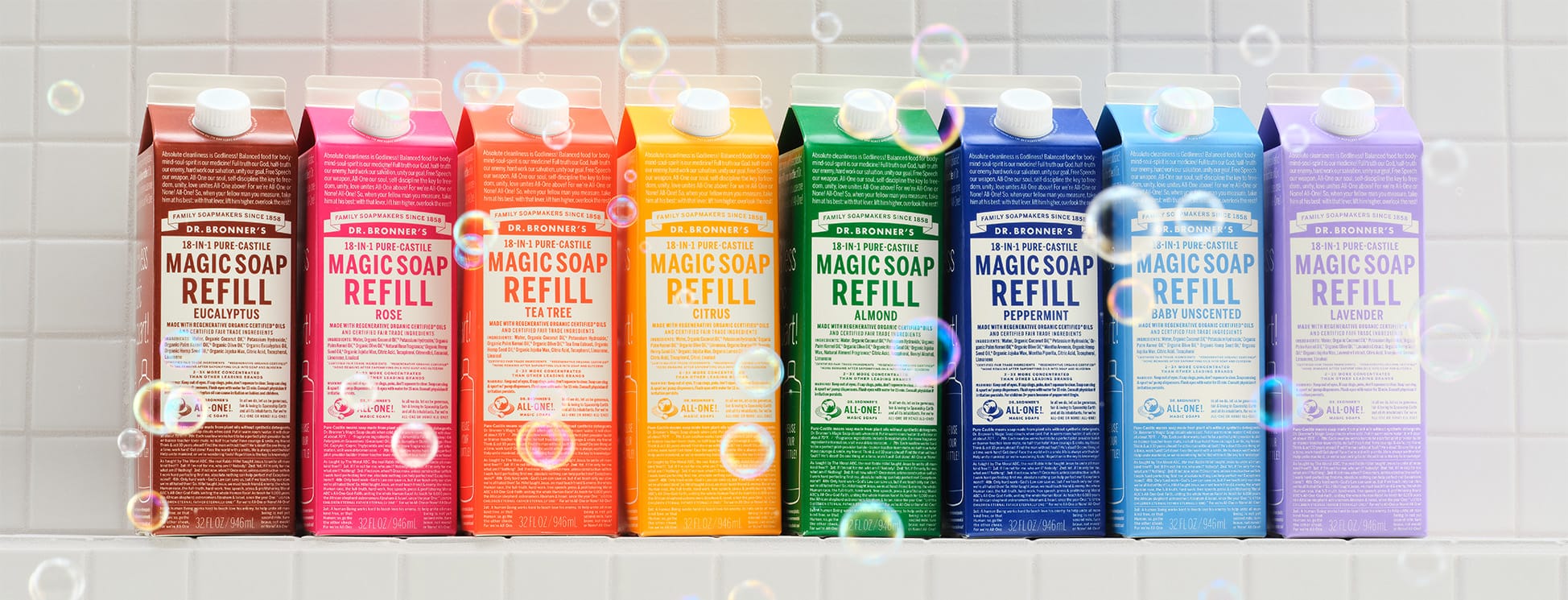
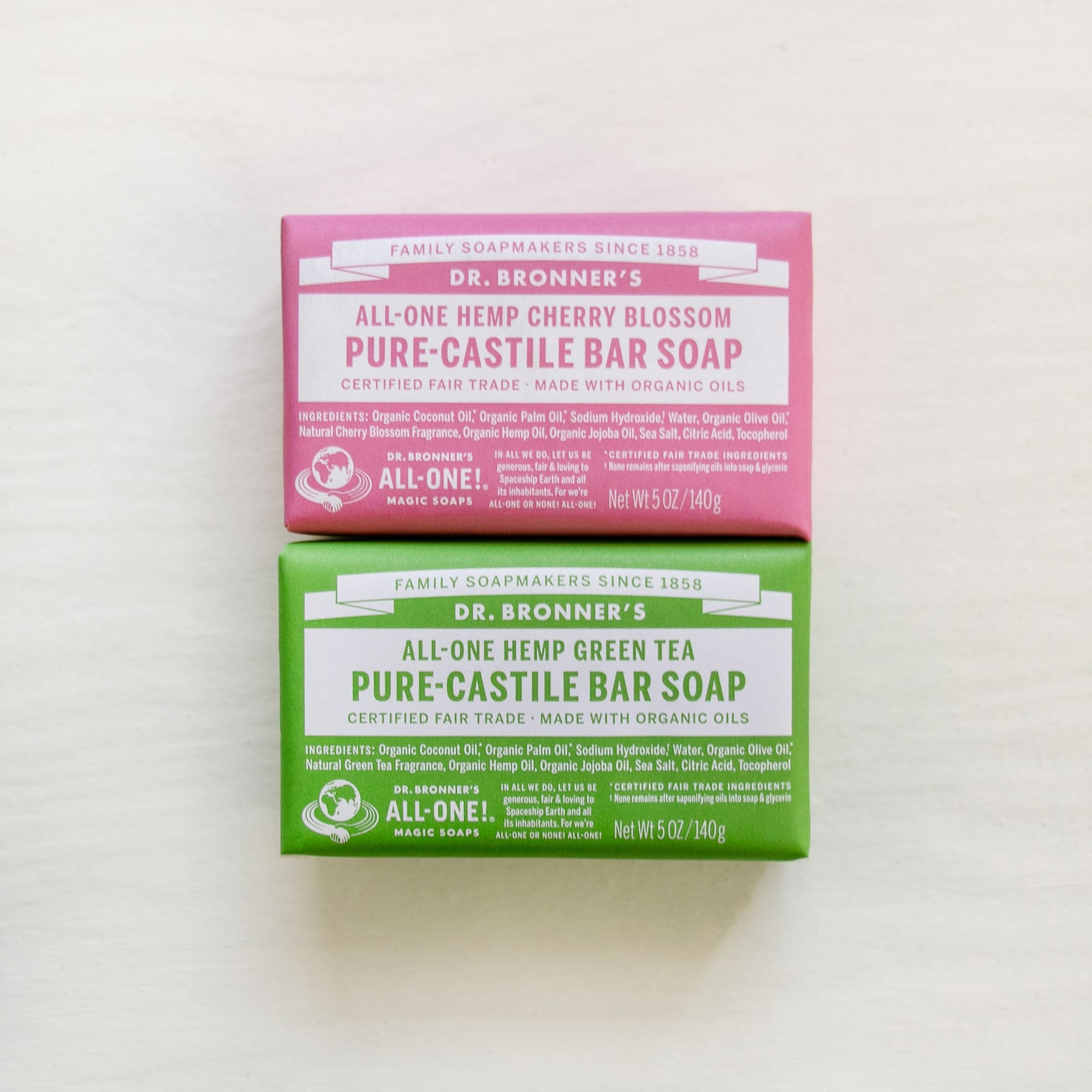
Castile soaps (liquid and bar) — Dr. Bronner’s signature product line. These soaps are advertised as multi-purpose (body wash, shampoo, hand soap, even household cleaning or toothpaste), organic, and fair-trade. This versatility offers consumers high value and convenience.
Body care and personal-care products — Over time Dr. Bronner’s expanded to lotions, balms, possibly home-care/cleaning products, in line with its natural and organic ethos.
Food products — The company earlier diversified to include items beyond soap (though relative share of revenue from food versus body care is unclear).
Limited edition / advocacy-driven products — The company occasionally produces limited edition products tied to social or environmental causes. For instance their 2023 All-One report references advocacy support for wildlife conservation (e.g., an “Orcas!” soap label in Canada) and environmental activism.
Evolution of offerings
Over decades the company expanded from its original soap offerings to a broader roster of personal-care, body-care, and even food products. It also deepened its commitment to fair-trade and organic supply chains by sourcing ethically from countries like Ghana, Samoa, India, Sri Lanka, Kenya, and others.
The offerings have maintained their core value proposition: natural, organic, fair-trade, multi-use, ethically produced.
Innovation pipeline, R&D, supply-chain partnerships
The company does not follow a traditional R&D pipeline typical of tech or pharma firms. Instead, its “innovation” is rooted in sourcing practices, supply-chain transparency, fair trade partnerships, and sustainability commitments.
Through a sister company (e.g., Serendiworld), Dr. Bronner’s sources organic, fair-trade raw materials globally.
As a pioneer in the natural-soap industry, the company’s early adoption of organic certification (USDA Organic) in 2003 shows foresight in aligning supply chain and certification to consumer demand for transparency and sustainability.
Go-to-Market & Marketing Strategy
Customer acquisition and sales channels
Dr. Bronner’s uses a combination of:
Traditional retail distribution (natural-food stores, health-oriented shops, mainstream retailers open to natural personal-care products).
E-commerce (their own website, possibly third-party retailers).
International distribution: products available in over 40 countries, per their 2023 All-One report.
Crucially Dr. Bronner’s does not rely on traditional advertising, influencer marketing, or large-scale promotional campaigns. The company has grown largely through word-of-mouth, reputation, and alignment with values-driven consumers.
Notable marketing and brand-building practices
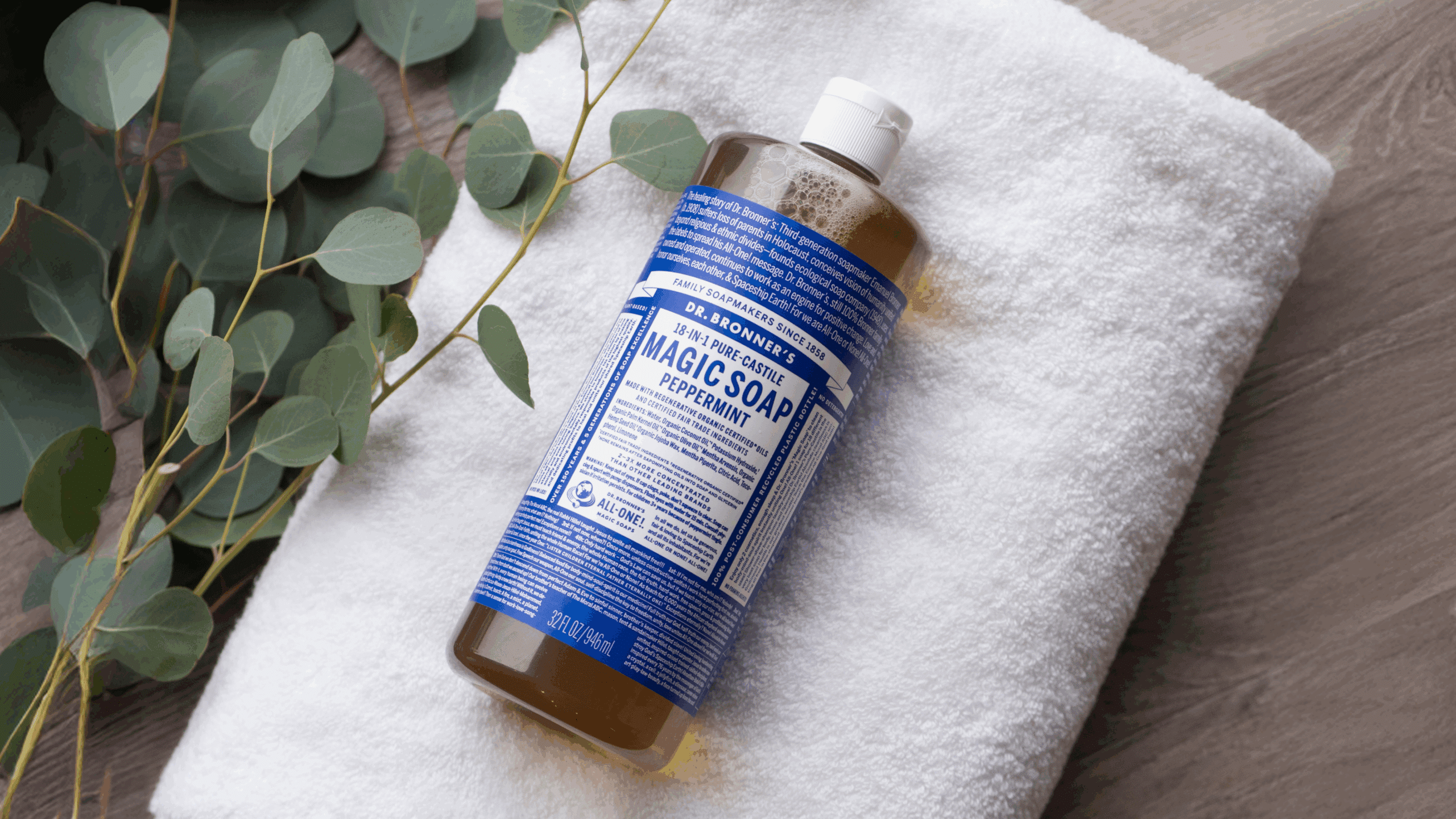
The company’s packaging itself serves as a marketing medium: detailed labels carrying the founder’s “All-One” philosophy, social commentary, and spiritual messaging. This creates a distinctive brand identity rooted in purpose, not just product.
Emphasis on transparency: fair-trade sourcing, organic certifications, supply-chain integrity. This builds trust among consumers wary of greenwashing.
Social activism and philanthropy: the company openly supports progressive causes (animal welfare, regenerative agriculture, climate justice, social justice), which resonates with its target audience.
Internal business practices aligned with values: executive pay cap, fair wages, supply-chain fairness, worker welfare — these reinforce brand authenticity and may appeal to conscious consumers and employees alike.
Customer retention, cross-sell, community initiatives
Given the consumable nature of soaps and personal-care goods, retention likely depends on repeat purchases. The brand’s values, consistent product quality, and global advocacy initiatives create loyalty.
Dr. Bronner’s also benefits from cross-sell: customers who trust the brand for soap may try its lotions, balms, or new products.
Community building and activism (e.g., via the All-One report, social-cause endorsements, international distribution tied to activism) help deepen the emotional bond with users.
Challenges & Crisis Management
Significant challenges or setbacks
Market competition and commoditization — As natural and organic personal-care becomes more mainstream, more companies (large and small) enter the space. This pressures pricing, margin, and differentiation.
Balancing growth with values — Scaling while maintaining stringent fair-trade, supply-chain and ethical standards can be costly and complex.
Brand positioning limitations — The “counterculture,” activism-driven, value-based identity may limit mass-market appeal or alienate consumers who prefer neutral branding.
Additional reputational risk emerged in recent years as the company increasingly associated with progressive social causes and even psychedelic advocacy. That thematic boldness could polarize potential customers.
Company response and long-term impact
Rather than retreat from its values, Dr. Bronner’s doubled down. The company continues to publish annual “All-One” reports detailing revenue, sustainability efforts, supply-chain practices, activism, and philanthropy.
They maintained fair pay and ethical practices even while scaling. By restricting executive pay to a multiple of the lowest employee wage they reinforced internal equity and maintained brand integrity.
While they may have limited traditional growth via advertising, their values-driven model built a strong loyal base, which supported consistent long-term growth.
Strategic Initiatives & Future Outlook
Ongoing or planned strategic initiatives
Continued expansion in global markets: Dr. Bronner’s currently sells in over 40 countries, and seems committed to growing the “All-One International Initiative,” tying international distribution to local activism, philanthropy, and supply-chain transparency.
Further diversification of product portfolio beyond soaps, body care, home care, potentially other wellness-related products (though public details are limited). The company’s history of expanding into body care, food products, and limited-edition items suggests appetite for extension.
Positioning for future growth
Given growing consumer demand for organic, natural, ethical personal-care products, Dr. Bronner’s is well positioned. Market forecasts for organic soap and natural personal-care categories point to sustained growth (CAGR between ~6–8 %).
Their differentiators are supply-chain integrity, fair trade sourcing, transparent ethics, brand authenticity, give them an edge against both large conglomerates and small niche competitors.
Their refusal to abandon values for rapid scaling may become more attractive to consumers seeking purpose-aligned brands in a crowded market.
Key Takeaways & Lessons Learned
A values-driven business model can scale. Dr. Bronner’s grew from USD 4 million in revenue in 1998 to about USD 209 million in 2024, while remaining committed to fair-trade sourcing, social justice, and ethical labor practices.
Authenticity and supply-chain transparency can become powerful competitive advantages. Consumers increasingly care not just about product performance, but about ethical sourcing, environmental impact, and corporate purpose. Dr. Bronner’s built trust by aligning all actions (wages, sourcing, activism, philanthropy) with its core “All-One” philosophy.
Purpose can substitute for advertising. The brand has grown largely without traditional advertising, relying instead on word-of-mouth, reputation, and shared values, showing that with strong brand identity, marketing spend can be minimized.
Long-term supply-chain investments pay off. By investing in fair-trade, organic sourcing from around the world, Dr. Bronner’s not only ensured ethical production but also built resilience and brand distinctiveness.
Scaling without compromising values is possible but requires discipline. The company’s executive pay cap, fair wages, and ethical sourcing show that scaling responsibly demands strict internal governance and resolve.
FAQ
How did Dr. Bronner's achieve such significant growth without traditional advertising?
Dr. Bronner's grew through word-of-mouth marketing, brand authenticity, and supply-chain integrity rather than paid advertising. The company built a loyal customer base aligned with its values of organic sourcing, fair trade, and social mission. This approach resulted in low customer acquisition costs while driving growth through repeat purchases and customer referrals.
What makes Dr. Bronner's business model different from other soap companies?
Dr. Bronner's operates as a mission-driven, family-owned company with unique practices including a 5:1 executive pay cap, fair wages starting at $25.93/hour, and commitment to organic and fair-trade sourcing. The company combines commercial soapmaking with social activism and maintains transparent supply chains sourcing from multiple countries while refusing traditional advertising.
What is the market opportunity for organic soap brands like Dr. Bronner's?
The global organic soap market is estimated at $7.15 billion in 2025 and projected to reach $9.54 billion by 2030, growing at 5.93% CAGR. Growth is driven by increasing consumer demand for natural, organic, and eco-friendly personal care products, rising awareness of ingredient safety, and greater interest in sustainable living and fair trade sourcing.
How has Dr. Bronner's maintained its values while scaling globally?
Dr. Bronner's preserved its founding ethos by implementing formal policies reflecting its values, including fair compensation, organic and fair-trade sourcing through sister companies, consistent philanthropic giving, and environmental activism. The family leadership doubled down on combining commercial success with social and environmental activism rather than pivoting away from the original mission.
More Case Studies
Browse all
Photo credit: Allbirds

Photo credit: Chobani Yogurt Company

Photo credit: Beyond Meat

Get weekly impact insights
Founder stories, funding news, and tools — curated for impact builders.
Join 25,000+ Causeartists
Free. Unsubscribe anytime.